

بررسی عملکرد،مزایا و استانداردهای بین المللی درجوش فورجینگ سر به سر میلگرد
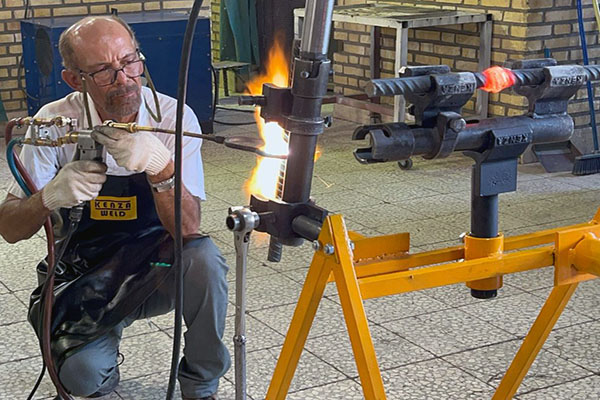
معرفی دستگاه جوش فورجینگ سر به سر میلگرد (GPW)
دستگاه جوش فورجینگ سر به سر میلگرد، جوش فشاری گازی یا Gas Pressure Welding (GPW) یکی از روش های اتصال حالت جامد است که نخستین بار در دهه ۱۹۳۰ در ژاپن و آمریکا توسعه یافت. طبق گزارش Japan Society of Civil Engineers، روش فورجینگ میلگرد به دلیل «پایداری مکانیکی بالا و رفتار یکنواخت تحت بارهای چرخه ای» به سرعت در پروژه های زیرساختی ژاپن استاندارد شد.
در GPW، دو سر میلگرد بدون ذوب شدن، تنها با گرمایش یکنواخت شعله و فشار محوری کنترل شده به یکدیگر متصل می شوند. این فرآیند باعث ایجاد یک اتصال هم جنس، بدون ناخالصی و فاقد ناحیه ذوب شده می شود؛ چیزی که در مقالات ژاپنی از آن با عنوان Solid-State Homogeneous Joint یاد می شود.
در استاندارد ژاپنی JIS Z 3891 آمده است که دمای مناسب برای GPW باید در محدوده ای باشد که فولاد وارد «حالت پلاستیک پایدار» شود؛ معمولاً حدود ۱۱۵۰ تا ۱۲۵۰ درجه سانتی گراد. در این دما، ساختار کریستالی فولاد نرم شده و تحت فشار هیدرولیکی، دو سر میلگرد در هم نفوذ می کنند.
مقاله ای از Welding Journal (AWS) توضیح می دهد که در GPW، برخلاف جوشکاری قوسی، «هیچ حوضچه مذابی تشکیل نمی شود و بنابراین خطر ترک های انجمادی، تخلخل و آخال سرباره وجود ندارد». این ویژگی ها باعث شده GPW در پروژه های حساس مانند پل های فولادی، خطوط ریلی، سازه های مقاوم در برابر زلزله و تونل های شهری به عنوان روش اصلی اتصال میلگرد استفاده شود.
مزایای فنی جوش فورجینگ سر به سر میلگرد (GPW)
۱. استحکام بالاتر از میلگرد پایه
در آزمایش های Tokyo Institute of Technology، اتصال GPW در تست کشش معمولاً از ناحیه میلگرد دچار شکست می شود، نه از محل اتصال. این یعنی اتصال قوی تر از خود میلگرد است.
۲. رفتار عالی تحت بارهای لرزه ای
مطالعات JSCE Earthquake Engineering Committee نشان می دهد که اتصالات GPW در بارگذاری چرخه ای، «رفتار یکنواخت و بدون تمرکز تنش» دارند. این موضوع برای کشورهایی مثل ژاپن حیاتی است.
۳. حذف وصله پوششی و کاهش مصرف فولاد
در گزارش Korea Infrastructure Safety Corp آمده است که استفاده از GPW در پروژه های تونلی، مصرف فولاد را تا ۱۲٪ کاهش داده است.
۴. کیفیت پایدار و قابل بازرسی
در استانداردهای ژاپنی، کیفیت اتصال از طریق بررسی شکل Upset و تست های غیرمخرب کنترل می شود. این روش به دلیل تکرارپذیری بالا، برای پروژه های پرتکرار ایده آل است.
اجزای دستگاه جوش فورجینگ سر به سر میلگرد (GPW Welding Machine)
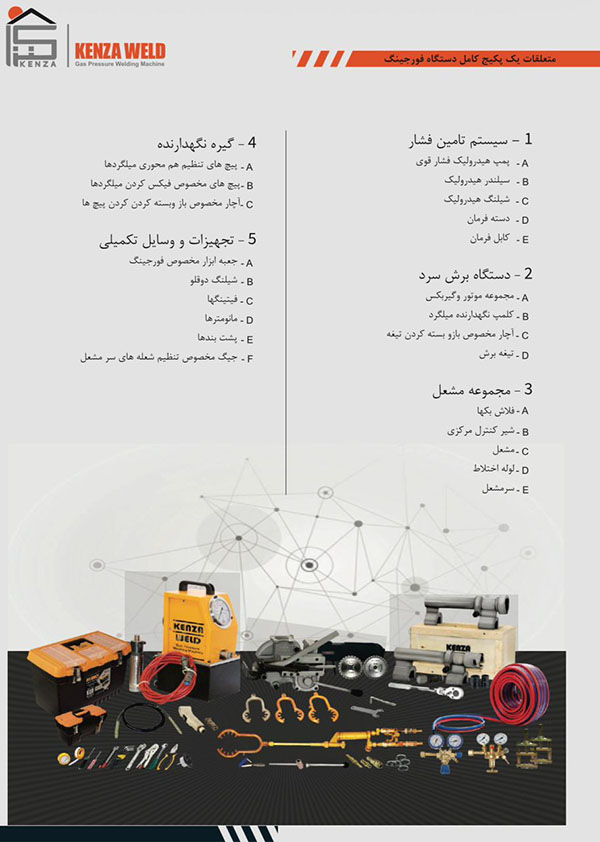
۱. واحد جوش (Burner Unit)
- مشعل گرمکن مخصوص، با توانمندی ایجاد شعله های خنثی و کاهنده
- مشعل چندسوراخ با الگوی شعله U-Type
- نازل چهارلبه برای توزیع یکنواخت حرارت
- رگلاتورهای دقیق اکسیژن و استیلن
- شیلنگ های فشارقوی با استاندارد EN 559
۲. واحد فشار (Hydraulic Unit)
- جک هیدرولیک با کورس کوتاه و فشار بالا
- فک های سخت کاری شده با طراحی Self-Centering
- سیستم کنترل فشار با دقت ±۵٪
- گیره های نگهدارنده با استاندارد JIS
۳. واحد برش سرد (Rebar Cutter)
- گیربکس کاهنده
- کلمپ نگهدارنده جهت برش ۹۰ درجه سر میلگرد
- تیغه برش هواخنک با اینسرت های تنگستن کارباید
مراحل اجرای جوش فورجینگ بر اساس استاندارد JIS Z 3891
- آماده سازی سطح: برش سرد دو سر میلگرد و صاف کردن آن ها
- تنظیم هم محوری: قرارگیری دقیق در فک ها
- گرمایش اولیه: رساندن ناحیه اتصال به حالت پلاستیک
- اعمال فشار اولیه: شروع درهم فشردگی سطحی
- گرمایش نهایی و فشار اصلی: تشکیل Upset و ایجاد اتصال حالت جامد
- خنک کاری طبیعی: بدون شوک حرارتی و بدون استفاده از آب
این سیکل معمولاً بین ۵۰ تا ۱۳۰ ثانیه بسته به قطر و جنس میلگرد طول می کشد.
کاربردهای جهانی جوش فورجینگ سر به سر میلگرد
طبق گزارش Japan Railway Technical Research Institute، بیش از ۹۰٪ اتصالات میلگرد در خطوط ریلی و ساختمانی ژاپن با GPW انجام می شود. در کره جنوبی نیز این روش در پروژه های تونلی و برج سازی به عنوان استاندارد پذیرفته شده است.
استاندارد آموزش و آزمون جوش فورجینگ میلگرد
آموزش اپراتورهای GPW معمولاً بر اساس دستورالعمل های استاندارد ژاپنی و اروپایی انجام می شود و شامل شناخت تجهیزات، تنظیمات فشار و دما، تشخیص شکل صحیح Upset، و انجام تست های مخرب و غیرمخرب نمونه های جوش است. تدوین یک دستورالعمل آموزشی و آزمون مهارتی استاندارد، برای تضمین کیفیت اتصال در پروژه های عمرانی ضروری است.
جمع بندی
دستگاه جوش فورجینگ سر به سر میلگرد (GPW) یک فناوری حالت جامد، استاندارد و فوق العاده قابل اعتماد است که ریشه در تحقیقات ژاپنی دارد و امروز در سراسر جهان برای پروژه های سنگین استفاده می شود. این روش با ایجاد اتصال هم جنس، استحکام بالا، رفتار لرزه ای مناسب و کاهش مصرف فولاد، یکی از بهترین گزینه ها برای پروژه های عمرانی مدرن است.
English Version
Engineering of connections in structures, analysis of gas pressure welding machine
Evaluation of performance, advantages, and international standards in gas pressure welding of rebar
Introduction of gas pressure welding machine (GPW)
The gas pressure welding machine (GPW), is one of the solid-state joining methods that was first developed in the 1930s in Japan and the United States. According to the report of the Japan Society of Civil Engineers, the rebar forging method, due to its “high mechanical stability and uniform behavior under cyclic loads”, quickly became standardized in Japanese infrastructure projects.
In GPW, the two ends of the rebar, without melting, are joined together only by uniform flame heating and controlled axial pressure. This process creates a homogeneous joint, free of impurities and without a melted zone; something that is referred to in Japanese articles as a Solid-State Homogeneous Joint.
In the Japanese standard JIS Z 3891, it is stated that the appropriate temperature for GPW must be in a range where the steel enters a “stable plastic state”; usually about 1150 to 1250 degrees Celsius. At this temperature, the crystal structure of the steel softens and, under hydraulic pressure, the two ends of the rebar interpenetrate.
An article from the Welding Journal (AWS) explains that in GPW, unlike arc welding, “no molten pool is formed and therefore the risk of solidification cracks, porosity, and slag inclusions does not exist.” These characteristics have made GPW used as the main method of rebar joining in critical projects such as steel bridges, railway lines, earthquake-resistant structures, and urban tunnels.
Technical advantages of gas pressure welding (GPW)
1. Higher strength than the base rebar
In tests at the Tokyo Institute of Technology, the GPW joint in tensile testing usually fails in the rebar region, not at the joint location. This means the joint is stronger than the rebar itself.
2. Excellent behavior under seismic loads
Studies by the JSCE Earthquake Engineering Committee show that GPW joints, under cyclic loading, have “uniform behavior without stress concentration.” This is vital for countries like Japan.
3. Elimination of lap splices and reduction of steel consumption
In a report by the Korea Infrastructure Safety Corp, it is stated that the use of GPW in tunnel projects has reduced steel consumption by up to 12%.
4. Stable and inspectable quality
In Japanese standards, the quality of the joint is controlled through inspection of the upset shape and non-destructive tests. Due to its high repeatability, this method is ideal for high-volume projects.
Components of the gas pressure welding machine (GPW Welding Machine)
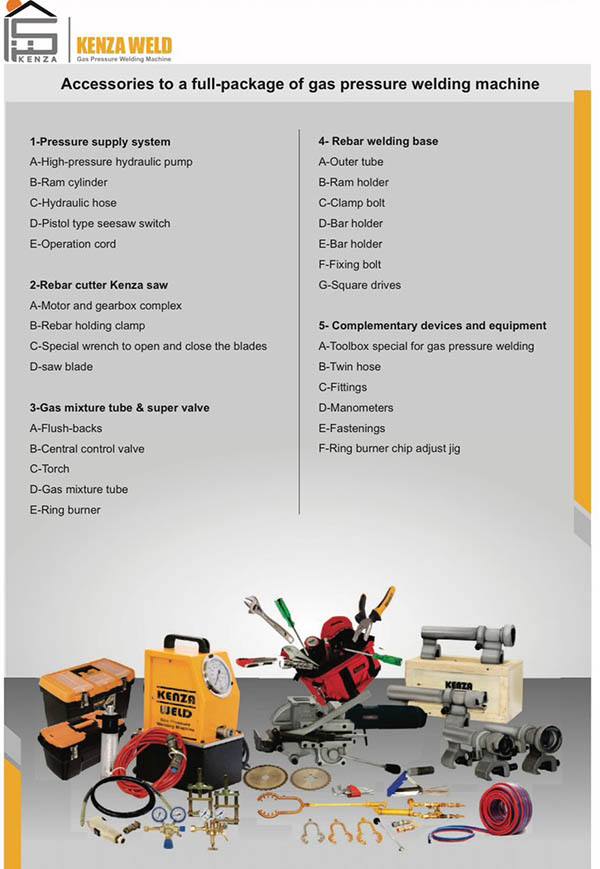
1. Welding unit (Burner Unit)
- Special heating torch, capable of producing neutral and reducing flames
- Multi-hole burner with U-type flame pattern
- Four-edge nozzle for uniform heat distribution
- Precision oxygen and acetylene regulators
- High-pressure hoses with EN 559 standard
2. Pressure unit (Hydraulic Unit)
- Hydraulic jack with short stroke and high pressure
- Hardened jaws with self-centering design
- Pressure control system with ±5% accuracy
- Holding clamps with JIS standard
3. Cold cutting unit (Rebar Cutter)
- Reduction gearbox
- Holding clamp for 90-degree cutting of the rebar end
- Air-cooled cutting blade with tungsten carbide inserts
Steps of performing forging welding based on JIS Z 3891 standard
- Surface preparation: cold cutting of both rebar ends and squaring them
- Alignment: precise positioning in the jaws
- Initial heating: bringing the joint area to the plastic state
- Application of initial pressure: start of surface upsetting
- Final heating and main pressure: formation of the upset and creation of the solid-state joint
- Natural cooling: without thermal shock and without using water
This cycle usually takes between 50 and 130 seconds depending on the diameter and grade of the rebar.
Global applications of gas pressure welding
According to the Japan Railway Technical Research Institute, more than 90% of rebar joints in railway and building projects in Japan are performed using GPW. In South Korea, this method is also accepted as a standard in tunnel and high-rise building projects.
Standard for training and testing of gas pressure welding
Training of GPW operators is usually carried out based on Japanese and European standard guidelines and includes equipment familiarization, pressure and temperature settings, identification of the correct upset shape, and performing destructive and non-destructive tests on welded samples. Preparing a standardized training and skill testing procedure is essential to ensure joint quality in construction projects.
Conclusion
The gas pressure welding (GPW) is a solid-state, standardized, and highly reliable technology that has its roots in Japanese research and is used today worldwide for heavy projects. By creating a homogeneous joint, high strength, suitable seismic behavior, and reduced steel consumption, this method is one of the best options for modern civil engineering projects.